Erik Richter · 10 October 2026
Examining the Effects of Domain Authority Fluctuations on Campaign ROI Calculations
Domain authority serves as a predictive score that search engines and marketers use to gauge a website's potential to rank in results pages, and its periodic shifts create ripple effects when teams calculate return on investment for digital campaigns. Observers note that these scores, typically ranging from one to one hundred, derive from factors including backlink quality, site structure, and content relevance, yet they respond to external algorithm adjustments that can alter values without immediate impact on actual traffic or conversions.
Defining Domain Authority and Its Measurement
Domain authority originated as a proprietary metric developed by Moz, and researchers continue to track how it correlates with organic search performance across thousands of domains. The calculation incorporates machine learning models trained on billions of search results, which means even small changes in link profiles or technical elements can produce noticeable swings. Data from industry reports shows that average fluctuations hover between two and five points per month for most sites, though larger drops occur during broad core updates that search engines deploy several times annually.
Those who monitor these metrics often combine domain authority readings with additional signals such as page authority, spam scores, and trust flow to build a fuller picture. Because the underlying algorithm remains proprietary, external analysts rely on observed patterns rather than direct access to weighting formulas. Studies from academic institutions in Canada have examined how these scores align with real-world ranking data, revealing moderate correlations that strengthen when campaigns focus on high-quality link acquisition over extended periods.
Primary Drivers Behind Score Variations
Algorithm updates from major search engines represent one consistent trigger for domain authority movement, and records indicate that significant revisions took place in October 2026, affecting numerous commercial domains simultaneously. Link acquisition campaigns introduce another variable, since new backlinks require time to influence the overall score while sudden losses from expired domains or penalized sources can produce rapid declines. Technical migrations, including changes in site architecture or content management systems, also contribute when crawlers re-evaluate signals during the transition.
Competitive actions play a role as well, because rival sites gaining authoritative links can shift relative authority scores even if a campaign's own efforts remain stable. Observers tracking these dynamics point out that seasonal content spikes or news coverage sometimes generate temporary boosts that fade once external attention moves elsewhere. The reality is that isolating the precise cause of any single fluctuation demands detailed historical data spanning multiple months.
Integration of Authority Metrics Into ROI Frameworks
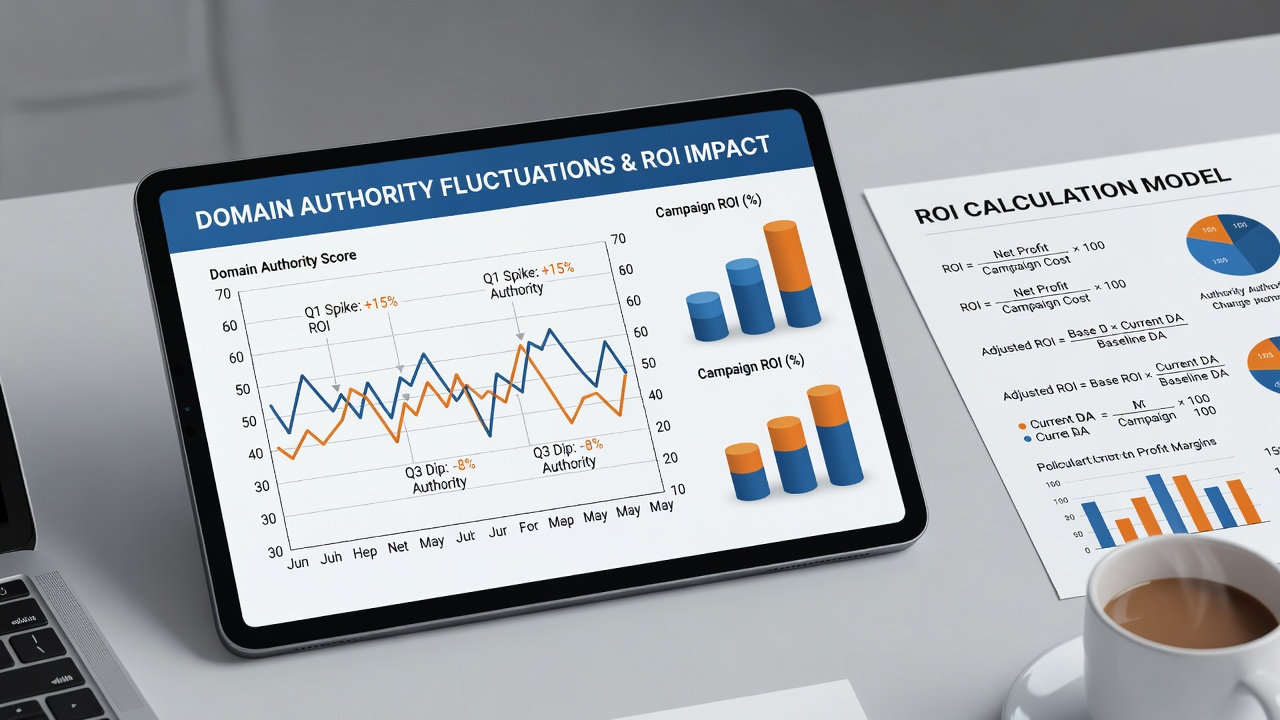
Return on investment calculations for search campaigns traditionally incorporate direct revenue, conversion rates, and customer acquisition costs, yet some teams layer domain authority into projected growth models. This approach attempts to forecast future traffic based on authority trends, which can lead to adjusted budget allocations when scores move unexpectedly. Figures from marketing analytics platforms reveal that campaigns relying heavily on authority projections experience variance in reported ROI of up to fifteen percent compared with those using traffic and conversion data alone.

Researchers at European universities have analyzed datasets from enterprise-level accounts and found that authority dips often prompt premature campaign adjustments, even when underlying keyword rankings hold steady. Conversely, sudden authority gains may inflate short-term ROI estimates if teams attribute upcoming revenue solely to the score change rather than to accumulated content and link efforts. The ball's in the hands of analysts who must decide whether to weight authority as a leading indicator or treat it strictly as a diagnostic tool.
Documented Impacts on Campaign Evaluation
Case examples from agencies operating across multiple regions demonstrate how authority fluctuations distort multi-quarter performance reviews. One documented instance involved a retail site that experienced a four-point authority drop following a registrar transition, which temporarily lowered projected ROI figures despite unchanged organic session counts. Teams that recalibrated their models to emphasize conversion value over authority trends reported more stable results across reporting periods.
Additional data from Australian digital marketing associations shows that campaigns incorporating regular authority audits alongside revenue tracking maintain tighter alignment between forecasted and actual returns. This practice helps surface situations where score changes stem from broader industry shifts rather than campaign-specific issues. What's interesting is that organizations using diversified metric sets, including those from independent tools like Ahrefs and SEMrush, encounter fewer instances of ROI miscalculation tied to single-source fluctuations.
Approaches for Stabilizing ROI Assessments
Marketers address these challenges by establishing baseline authority readings at campaign launch and tracking delta values rather than absolute scores. They pair this data with granular performance indicators such as keyword position changes, click-through rates, and assisted conversions. External benchmarks from government digital economy reports in the United States provide context for expected volatility levels during different quarters, allowing teams to set tolerance thresholds accordingly.
Automated dashboards that refresh multiple data streams simultaneously reduce the lag between authority shifts and corresponding ROI revisions. Those who've implemented such systems report clearer separation between metric noise and genuine performance signals. Regular cross-verification against third-party ranking data further anchors calculations in observable outcomes instead of predictive scores alone.
Conclusion
Domain authority fluctuations introduce measurable complexity into campaign ROI calculations, particularly when teams integrate predictive scores into forward-looking financial models. Evidence from multiple sources indicates that consistent use of diversified metrics, combined with regular recalibration during periods of elevated volatility such as October 2026 updates, supports more accurate performance attribution. The practice of grounding evaluations in traffic, conversion, and revenue data while treating authority as a supplementary diagnostic continues to yield reliable results across varied campaign types and market conditions.